.

Wednesday, December 2, 2015

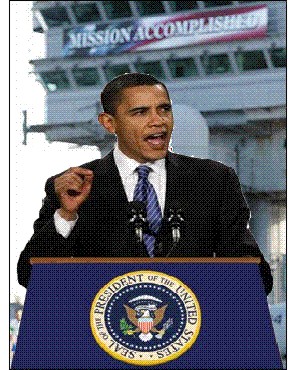
Thanksgiving: ObamaTax version

This family had "that talk" at Thanksgiving. Given that the 'talker' is an ObamaTax proponent, and the rest of the family are realists, it went about as you'd expect:


[Hat Tip: Ace of Spades]

My new article us up ...

Scarlett and Belair MIG Decision Overturned in Appeal

In the well known Scarlett and Belair case, the claimant was injured in an accident on September 18, 2010. He took the position that he while he did suffer sprains and strains, he also suffered from pre-existing conditions and subsequent psychological disabilities that took him out of the Minor Injury Guideline. After the accident, he was diagnosed with temporal mandibular joint (TMJ) syndrome.  Later there were additional diagnoses of chronic pain and psychological impairments.

In a preliminary issue hearing, the arbitrator found that the MIG is informational and non-binding that was not altered by its incorporation in the SABS.  He also found that the insurer had the onus of proving that the claimant had sustained a minor and and was subject to the $3,500 minor injury limit. In coming to his conclusion, the arbitrator also relied upon a number of cases, his own arguments, and his own English/French translations – without providing the parties the opportunity to make submissions.

The arbitrator's decision caused considerable angst within the insurance industry and a concern that the introduction of a monetary cap for treating and assessing minor injuries would not hold - a significant change introduced by the government in September 2010. However, the Director’s Delegate has allowed the insurer’s appeal in the Scarlett and Belair decision and more importantly confirms that guidelines incorporated in the SABS are binding.  This is important to establish considering the MIG is not the only guideline incorporated in the SABS.

Some of the key points raised in the Director’s Delegate’s decision:
  • The arbitrator failed to address why he found that the claimant’s chronic pain, depressive symptoms and TMJ disorder were separate and distinct from his soft tissue injuries and were not the sequelae thereof.
  • The arbitrator never addressed the test in the SABS of whether the claimant’s impairment was “predominantly” a minor injury.  The SABS recognizes that a claimant may have mutiple injuries but that does not automatically bring he or she out of the minor injury category.
  • The arbitrator erred in finding that the burden of proof lay on the insurer to show that the claimant was subject to the MIG. The burden of proof always rests on the insured of proving that he or she fits within a scope of coverage.
  • The arbitrator was incorrect in implying that $50,000 in medical and rehabilitation expenses was some sort of default coverage.
  • The arbitrator erred in finding that “compelling evidence” simply means “credible evidence”, finding that the word “compelling” means more than “credible”.  As well, the discussion of "credible evidence" was not relevant to this case.
  • The arbitrator erred in finding that the MIG was not binding because it was only a Guideline. The Director’s Delegate found that the MIG is binding because it was issued pursuant to section 268.3 of the Insurance Act, the definition of “MIG in the SABS refers to section 268.3, and the MIG is then applied in section 18 of the SABS, thereby incorporating the MIG into the SABS by reference.
  • The arbitrator should not have been conducting his own research and relying on cases and statutory provisions that he then raised on his own after the hearing, which did not provide the parties the opportunity to respond.
The Director's Delegate remitted the matter to a full hearing before a different arbitrator, on all issues as between the parties.  The new arbitrator may still find that the claimant's impairments fall outside the definition of "minor injury" in the SABS.  It may well be that because of the claimant's other impairments (TMJ syndrome and chronic pain), an arbitrator may find that the claimant's impairment was not predominantly a minor injury.  Should that be the case, hopefully the decision will be based on the policy intent of the 2010 reforms and the SABS.

Monday Afternoon LinkFest [UPDATED]

From the spindle:

■ A whole raft of ObamaTaxes are due to hit shortly, including:

"Section 9010 of the Patient Protection and Affordable Care Act requires health plans and commercial insurers to pay $8 billion in new taxes in the coming year, and more in later years, to help compensate for the new, subsidized business PPACA is supposed to send to carriers."

A quibble with the phrase "health plans and commercial insurers to pay $8 billion in new taxes." Um, no - neither insurers nor health plans will pay these taxes, you will. As regular readers know, businesses don't pay taxes.


■ SHOP dropped (temporarily):

"An online health insurance marketplace for small businesses is being put off until November 2014"

Ostensibly, this is to give Ms Shecantbeserious time to work out the various "bugs" and "glitches" plaguing the individual version. So here's a question: if one has already taken the SHOP certification course necessary for an agent to sell through that vaporware, will a new, updated version be required when (if?) it's ever actually rolled out?


■ We already know that US citizens' medical records are no longer private, but FoIB Holly R tips us to this horrific (and eye-opening) story of a Canadian woman whose supposedly confidential medical history was accessed by US Homeland (In)Security:

"I was turned away, I was told, because I had a hospitalization in the summer of 2012 for clinical depression ... The Weston woman was told by the U.S. agent she would have to get “medical clearance’’ and be examined by one of only three doctors in Toronto ... she was so shocked and devastated by what was going on, she wasn’t thinking about how U.S. authorities could access her supposedly private medical information."

Bet she is now.


■ We already know that the real reason that HC.gov requires one to part with substantial private information is to assess what, if any, subsidies are available in order to (try to) hide the true cost of this horrendous coverage.

But did you know that the original plan was to offer an "Anonymous Shopper" widget, which let one see which plans were available, as well as their actual sticker price, without giving away the store?

Worse yet, that little piece actually worked:

"When the troubled federal health care website came online, the key "Anonymous Shopper" function was nowhere to be found -- even though it passed a key test almost two weeks before HealthCare.gov launched ... The window shopping feature allows website visitors to compare health insurance plans without opening an account ... is still unavailable to users." [emphasis added]

Gee, wonder why.


■ In case you were wondering about the potential ObamaTax end-game, here's one potentially likely scenario from Venezuela, courtesy of The Political Hat blog:

"The country’s 1999 constitution guarantees free universal health care to Venezuelans ... Yet of the country’s 100 fully functioning public hospitals, nine in 10 have just 7 percent of the supplies they need”

Is this our future, as well?

New Auto Insurance Regulations

In October the government posted a notice on their Regulatory Register inviting stakeholders who comment on proposed auto insurance regulation changes.  The regulations have now been approved by the Ontario Cabinet. The regulations dealing with the licensing of service providers are effective December 1, 2014.  The regulation amendment dealing with the interest on overdue payments is effective January 1, 2015.

Section 51 of the SABS (O. Reg. 34/10) has been amended (by O.Reg. 236/14) so that interest payments of 1 percent per month compounded monthly for overdue SABS payments only applies up to the date on which a mediation proceeding begins.  Once the dispute reaches mediation the interest on overdue SABS payments is calculated at the prejudgment interest rate described in the Courts of Justice Act that is used for past pecuniary loss.  The lower interest rate and is then payable until the date a settlement is reached or a decision is issued that finally disposes of the dispute.

Section 49.1 has been added (by O. Reg. 227/14) to the SABS (O. Reg. 34/10)  to cover invoicing by unlicensed service providers.  These providers must bill claimants using the Standard Invoice (OCF-21) and the claimant is to submit the invoice to their insurer.  It is the responsibility of the insurer to provide HCAI with billing information from invoices submitted by claimants when they reimburse a claimant.

The Unfair or Deceptive Acts or Practices regulation (O. Reg. 7/00) has been amended (by O. Reg. 231/14). An unlicensed service provider may not advertise that they are a licensed provider. A licensed provider that has had their licence suspended or revoked may not continue to advertise that they are licensed.

The Administrative Penalties regulation (O. Reg. 408/12) has been amended (by O. Reg. 230/14) to deal with significant contraventions of the regulations that can involve or potentially lead to improper billing practices by service providers.

The Service Providers – Standards for Business Systems and Practices regulation (O. Reg. 90/14) is amended (by O. Reg. 228/14) to introduce a duty to report accurately to the Superintendent of Financial Services, in the periodic return established under section 288.4(5) of the Insurance Act, all information necessary to calculate any applicable fees established pursuant to section 121.1 of the Insurance Act.

The Service Providers – Listed Expenses regulation (O. Reg. 89/14) is amended (by O. Reg. 229/14) to allow licensed service providers to seek payment for outstanding accounts directly from claimants where a full and final settlement has been reached and signed between the insurer and the insured person that includes these amounts.

Why do we tolerate hospitals ripping off anyone?

"The patient had health insurance through her husband’s job. But it was cancelled just after the hospital validated it, because the employer failed to pay the premium. The procedure was performed, and the patient was charged as “self-pay.”

If Medicare had been the payor in this case, the hospital’s total reimbursement would have been a little less than $2,000. But the lithotripsy and associated costs were billed at $33,160, or just under 17 times the Medicare rate. After the patient applied for financial assistance, a 30% contractual adjustment was applied, reducing her bill to just under 12 times the Medicare rate.

If the health system had asked her to pay 190 percent of Medicare – typically the upper end of commercial insurance rates – her bill would have been about $3,800. By the time I was contacted, the patient and her husband – responsible people trying to make good on their debt – had already paid the health system $5,700 or 285 percent of Medicare. The hospital insisted they owed an additional $16,000.

Section 9007 of the ACA took effect last year and prohibits excessive pricing for self-pay patients, and would revoke a charitable hospital’s tax-exempt status if it charges them more than it charges for insured patients. The language is ambiguous, conceivably allowing health systems to circumvent the law’s intent. But the spirit is clear. To keep their not-for-profit tax status and perks, health systems must stop taking advantage of self-pay patients."

While I disagree that the ACA has done anything to really address this, just lip service like it gave affordability, why should we tolerate anyone being subjected to this abuse? That is the failure of the ACA and why it has hurt affordability, not helped it. Small or out-of-state health plans have no more bargaining power, maybe even less, than an in-state resident. In fact, while there are already laws to protect the uninsured, there is no protection for health plans, and with considerably deeper pockets they are even juicer targets.

By capping out of pocket, mandating unlimited lifetime maximums and requiring services be paid at 100% the ACA has exacerbated this problem.